
Congress is taking another swing at swatting an invasive fruit fly.
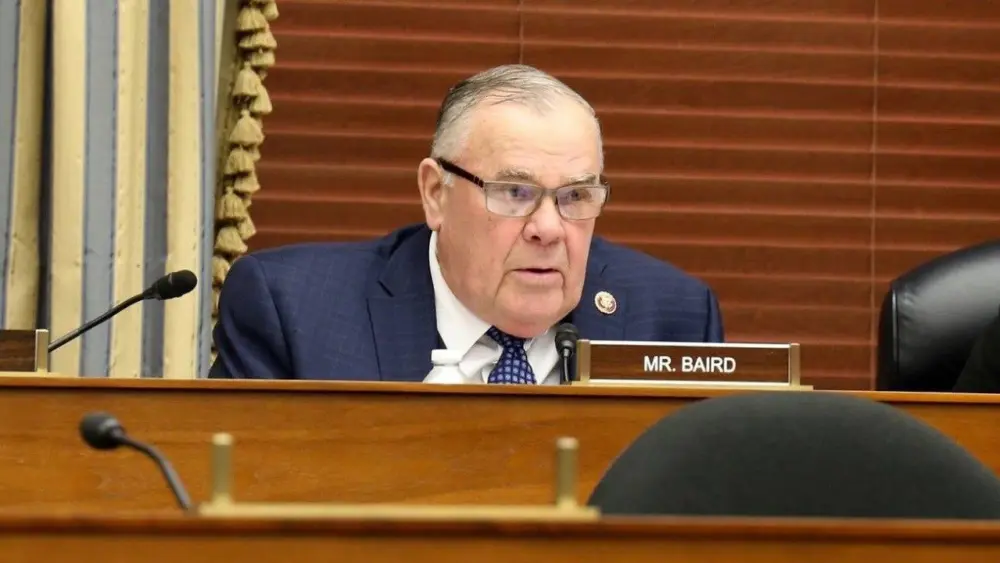
Sen. Mike Braun (R-IN), along with Sen. Gary Peters (D-MI), Sen. Susan Collins (R-ME), and Sen. Jeff Merkley (D-OR), have reintroduced the bipartisan Spotted Wing Abatement Trust (SWAT) Act that would reduce the spread of Spotted-wing drosophila (SWD). It would also advance research on the invasive insect that is hurting fruit growers and their crops across Indiana and the U.S,
“It’s about the economy and about jobs, and it’s important for us to make sure that we’re dealing with an invasive past that is causing tremendous challenges,” said Sen. Peters.
The spotted wing drosophila is an invasive pest that originated in East Asia. It lays eggs in soft-skinned fruit crops such as blueberries, cherries, and strawberries. SWD was first found in the continental United States in 2008, and they have spread across the West Coast, as well as through Florida, Utah, the Carolinas, Wisconsin, Michigan, and Indiana.
According to Purdue University, the Spotted-wing drosophila (SWD) was first detected in Indiana in 2012 and have negatively impacted the state’s blueberries crops, as well as raspberries, blackberries, strawberries, cherries, and grapes.
The SWAT Act would establish a $6.5 million fund managed by the U.S. Department of Agriculture’s Animal and Plant Health Inspection Service to advance research and strengthen efforts to reduce the species’ population in the U.S. Peters talked about the SWAT Act while touring the Crossroads Blueberry Farm in West Olive, Michigan. Farm owner Luke DeHaan talked about how the pest affects his business.
“The stores have zero tolerance for this. So, unfortunately, as soon as we see blue fruit, we have to prevent that. So we’re spraying every five to six days, and as you can imagine, it’s very costly,” he said. “From a spray material side, we’re spending about $800 an acre and on this pests and it’s costing us at least $200 an acre. That was a couple of years ago, and so at least a quarter of what we’re spending our money on material-wise is to take care of this pest.”
Sen. Peters plans to push for the bill to be included in the 2023 Farm Bill.
Click below to hear Sabrina Halvorson’s radio news report for Hoosier Ag Today.