A Madison County man is finding new life for an unlikely construction leftover…used drywall.
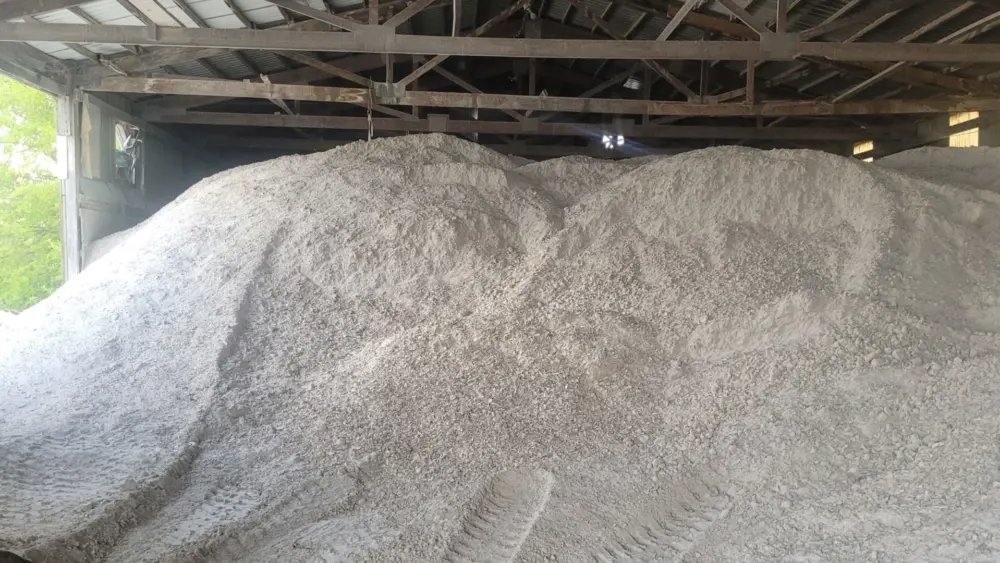
Instead of sending scrap drywall to the landfill, Randy Scott from Anderson, Indiana is recycling it into a soil additive for farms and gardens. He says drywall is made primarily of gypsum, a naturally occurring mineral that adds calcium and sulfur to soil — nutrients important for plant growth.
“Gypsum improves the soil structure,” says Scott. “It helps prevent crusting of the soil for all these no-till farmers. It helps with the compacted soil. It helps wet soil. It helps with water runoff and erosion. Indiana has a lot of clay. So we have a lot more use for this product than, let’s say, Colorado where the soils are different, and it wouldn’t help their soil. The higher density clay ground you have, the more this product will help you, because of its ability to break down clay. But the immediate results of applying gypsum are calcium and sulfur, which more recently has been the higher demand. And with the higher costs of fertilizer these days, if you can release the nutrients from the clay and supplement your sulfur needs with this product, it’s become affordable.”
The drywall is ground into a fine material that can be applied to fields or mixed into compost. The process helps improve soil structure, reduce erosion, and increase water infiltration.
“The product we sell has an advantage over virgin gypsum,” Scott adds. “Because of the paper. Gypsum is 93% gypsum and 7% paper coming from the source like wallboard that we use. And the worms love the paper. Well, worms are the best aerators on the planet, and they’re, waste is high in nitrogen.”
Agronomists say recycled gypsum has long been used in agriculture, but the challenge has been sourcing it responsibly. This local effort keeps waste out of landfills while offering farmers a lower-cost soil amendment.
“One of the main benefits to everybody else, not even farmers or people not in this business, is that gypsum is a real issue in our landfills. That same sulfur that benefits corn becomes an issue when buried underground and allowed to build up toxic fumes. The last thing we should be doing is putting it in the landfills,” says Scott.
The Madison County-based operation is still growing, but supporters say it’s a win for the environment, local agriculture, and the circular economy — proving that one man’s construction waste can become another field’s foundation for healthier soil.