Corn growers are facing renewed financial pressure just as planting season begins, with global tensions now adding to an already difficult outlook.
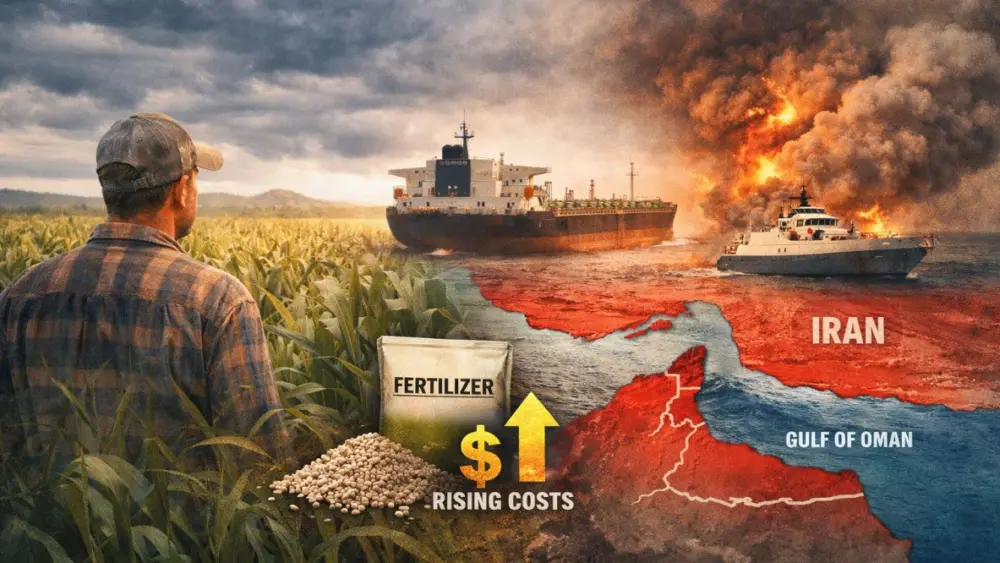
For several years, farmers have struggled with high input costs, from seed to fuel, while corn futures prices have failed to keep pace. Now, the ongoing conflict involving Iran is tightening the squeeze even further. Key fertilizer shipments are being disrupted through the Strait of Hormuz, a critical global shipping lane, limiting supplies at a crucial time.
According to Michigan farmer and First Vice President of the National Corn Growers Association Matt Frostic, “We can manage phosphorus and potash a little bit differently, in that maybe we can cut our rates to get through a high priced year to try and capture profitability, but nitrogen is one of those things that if we cut even one unit of that product out, we’ll lose a bushel of corn. So, it’s really hard to cut that product. And that’s the one element that is become extremely expensive in our inputs at this point.”
Lesly McNitt, NCGA Vice President of Public Policy says that’s especially concerning for phosphate, where farmers were already dealing with a lack of competitive options. With fewer supplies moving and uncertainty rising, prices could climb even higher in the weeks ahead.
“In a typical year, the United States sources about 40% of imported phosphate products from Saudi Arabia. When these fertilizers can’t be transported through the Strait of Hormuz, there are real implications for availability and price, and there is a global market impact.”
Producers heading into spring planting are now being forced to make tough decisions…whether to cut back on applications, absorb higher costs, or gamble on uncertain markets.
The bottom line: between global instability and ongoing economic challenges, it’s shaping up to be another tough season for corn growers across the country.