
The House on Wednesday approved legislation that would allow the year-round sale of E15 gasoline, delivering a long-sought victory for corn growers and biofuel advocates while exposing sharp divisions within both parties over the expansion of biofuels and the future U.S. energy policy.
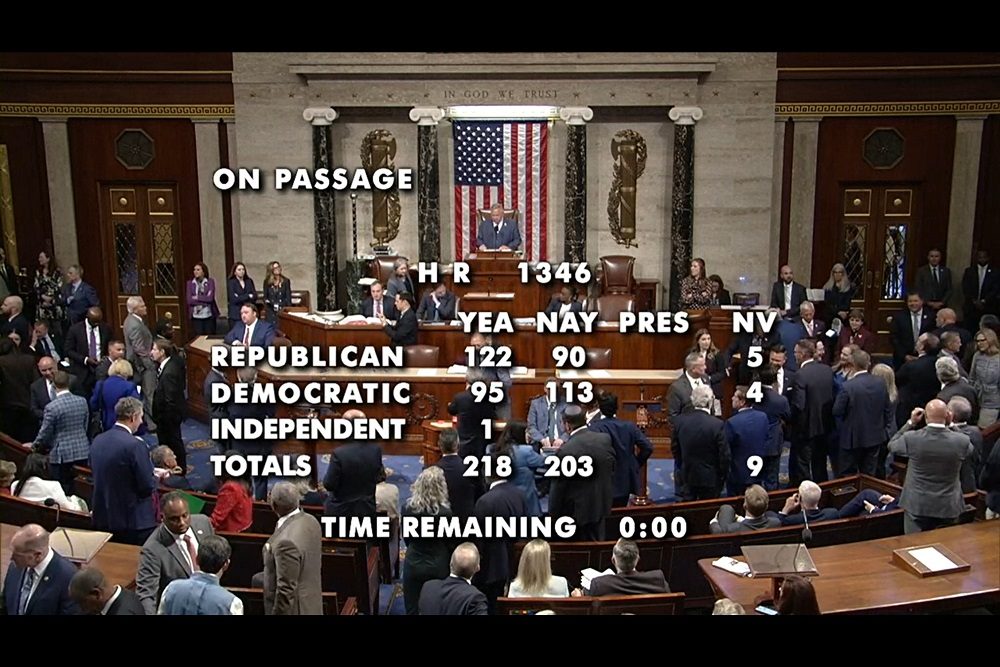
The bill — H.R. 1346, known as the Nationwide Consumer and Fuel Retailer Choice Act — passed 218-203, with support from 122 Republicans, 95 Democrats and one independent. Opposition came from 90 Republicans and 113 Democrats, underscoring the unusual coalition politics surrounding ethanol policy. Even Republican leadership split, with House Speaker Mike Johnson and House Majority Leader Steve Scalise voting against the measure, while Majority Whip Tom Emmer backed it.
The legislation would remove longstanding seasonal restrictions that limit sales of E15 — a gasoline blend containing 15 percent ethanol — during summer months in much of the country due to air quality regulations. Although administrations from both parties have issued temporary waivers in recent years, supporters have pushed for a permanent fix through Congress.
For lawmakers from the Midwest, including Congressman Jim Baird (R-IN-04), the vote carried economic significance for farmers and rural Hoosiers.
“For states like Indiana and districts like mine, this legislation is not just about fuel policy. Year-round E-15 nationwide will support the countless corn farmers in my district, strengthen our rural economies, and lower energy costs for hardworking families,” Baird said. “This legislation will provide a strong, reliable market for corn farmers in Indiana, giving them more confidence to plan for the future. E-15 is also an American-made fuel that will help us reduce our dependence on foreign energy while supporting domestic manufacturing and agriculture. This is key to unleashing American energy dominance and reducing prices at the gas pump. I was proud to join with my House colleagues to pass this legislation, and I strongly urge the Senate to quickly take up and pass this critical bill so it can be signed into law.”
Echoing those economic and energy arguments, Congressman Mark Messmer (R-IN-08) pointed to the scale of the ethanol industry’s footprint in Indiana and framed the legislation as a long-overdue step toward expanding consumer fuel choice while reinforcing rural economies and domestic energy production.
“The Indiana ethanol industry supports 35,000 jobs and $3.5 billion in economic activity. The Nationwide Consumer and Fuel Retailer Choice Act finally ends the outdated ban on summer E-15 sales and gives Americans the freedom to choose the fuel that best fits their needs, regardless of the time of year. I’m proud to have fought to support the refining industry in our rural communities, American energy independence, and farm communities throughout Indiana’s 8th Congressional District and the United States in voting to pass this critical bill,” said Messmer.
The stakes are particularly high in Indiana, where corn production is a cornerstone of the agricultural economy and where 15 ethanol plants form a critical link between farmers and fuel markets. Year-round E15 access is expected to stabilize demand for corn, offering growers a more predictable outlet at a time when many are facing multiple years of tight margins and rising input costs. Industry estimates suggest expanded E15 access could significantly boost domestic corn demand, reinforcing the economic viability of ethanol facilities that anchor many rural communities across the state.
Supporters argue the measure would also provide relief to consumers. Backers point to projections that E15 can reduce fuel costs by 10 to 30 cents per gallon, a message that has gained urgency amid rising gasoline prices tied in part to geopolitical tensions, including conflict involving Iran.
Agricultural and biofuel groups quickly applauded the House vote.
“We are thrilled to see that E15 legislation passed the House today and are deeply appreciative of the legislation’s sponsors, co-sponsors and all its congressional supporters,” said Jed Bower, president of the National Corn Growers Association. “Passage of this bill is essential to the success of corn farmers and rural communities, particularly as our growers face their fourth year of net losses and struggle with high input costs. It would also help drivers across the country who could save 10 to 30 cents per gallon on gas as fuel prices continue to rise. We encourage members of the Senate to quickly take up this bill and send it to the president’s desk for signature.”
Leaders of Growth Energy emphasized the consumer benefits of expanded ethanol access.
“American families are asking for help, and today’s vote brings us one step closer to delivering real savings at the pump,” said Emily Skor, CEO of Growth Energy. “We’re deeply grateful to bipartisan lawmakers from across the nation who always stood strong and rebuffed pressure to protect refinery profits at the expense of American consumers. All eyes are now on the Senate, where we have been working closely with our champions to clear a path forward for year-round E15. The sooner this bill reaches the President’s desk, the sooner we can deliver more savings to more communities in every corner of the country. We urge Senate leaders to quickly reject critics who oppose competition at the pump from lower-cost fuel. Year-round E15 simply allows retailers the option to offer a another, less expensive fuel choice to drivers. Now is the time to act.”
The Renewable Fuels Association framed the vote as a breakthrough after years of regulatory and legislative hurdles.
“Today’s passage of year-round E15 legislation is a hard-fought victory for consumers seeking lower prices at the pump, farmers seeking new market opportunities, and American families who want cleaner air and greater energy independence,” said Geoff Cooper, President and CEO of the Renewable Fuels Association. “At a time of extreme market volatility and higher costs, this bill provides badly needed certainty for fuel retailers, oil refiners, ethanol producers, and consumers alike. The legislation gives Americans the freedom to choose E15 and removes three decades of red tape that had stifled competition and choice in the marketplace.”
Farm groups echoed that sentiment.
“Farmers applaud the House of Representatives, which proved what is possible when lawmakers work together on behalf of the American people,” said Zippy Duvall of the American Farm Bureau Federation. “The bipartisan vote to allow the sale of year-round E15 will benefit drivers and farmers at a time both are desperately in need of good news. Fuels blended with 15% ethanol will increase demand for corn, which will help a struggling farm economy. America’s drivers will also have the choice to fill their tanks with fuel that is typically 10 to 30 cents cheaper per gallon. We urge the Senate to follow the House’s lead and get this to the desk of President Trump, who has already signaled his support for E15. It’s a win-win for farmers, and for all of America.”
Yet the legislation also revealed fault lines within agriculture itself. The American Soybean Association (ASA) voiced support for year-round E15 in principle but warned that provisions tied to refinery exemptions could have unintended consequences.
“ASA continues to fully support year-round access to E15 and policies that strengthen domestic biofuels demand and create new market opportunities for farmers. However, the bill passed today contains more than just E15 provisions,” the group said. “Based on the findings of the recent Food and Agricultural Policy Research Institute (FAPRI) at the University of Missouri and Congressional Budget Office analyses, which also consider the permanent small refinery exemptions included in the bill, the House-passed legislation would result in reduced net farm income and negative economic impacts for soybean growers and the broader agricultural economy. Moving forward, ASA will continue working with lawmakers and stakeholders to advance solutions that enable year-round E15 without rewarding petroleum refiners who do not comply with the Renewable Fuel Standard at the expense of a critical domestic market for U.S. soy. Year-round E15 legislation must be pursued with a collective goal of strengthening farm income and supporting markets for both soybean and corn farmers.”
Opponents of the bill, including some Republicans from oil-producing states, have argued that expanding E15 amounts to government favoritism toward ethanol producers and could harm small refineries. The debate grew contentious on Capitol Hill, with rare procedural maneuvers and intraparty clashes highlighting the depth of disagreement.
Still, for Midwestern lawmakers and the agricultural sector, Wednesday’s vote marked a significant milestone after years of stalled efforts. The bill now moves to the Senate, where its prospects remain uncertain — but where its outcome could carry lasting implications for fuel markets, farm income and rural economies from Indiana to Iowa.