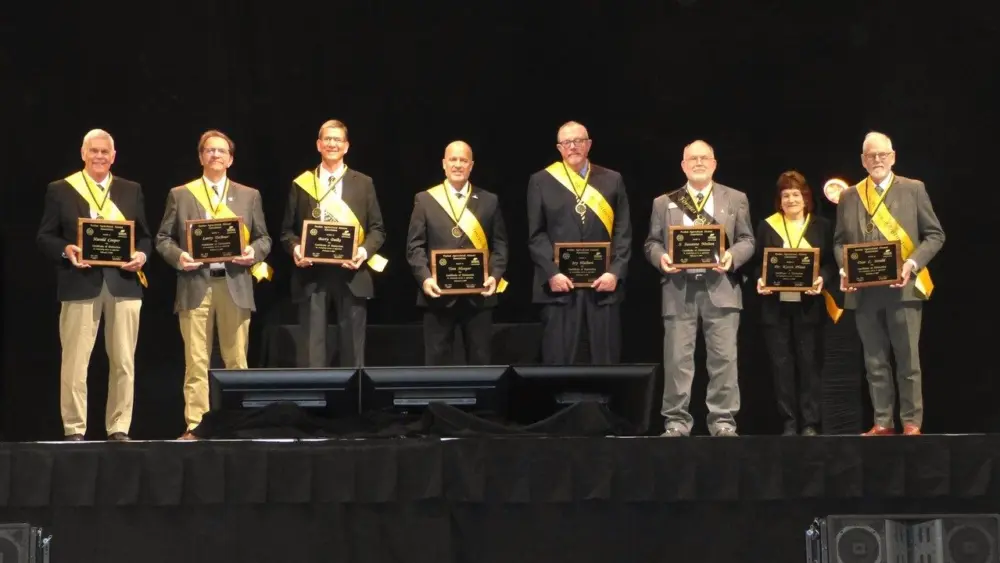
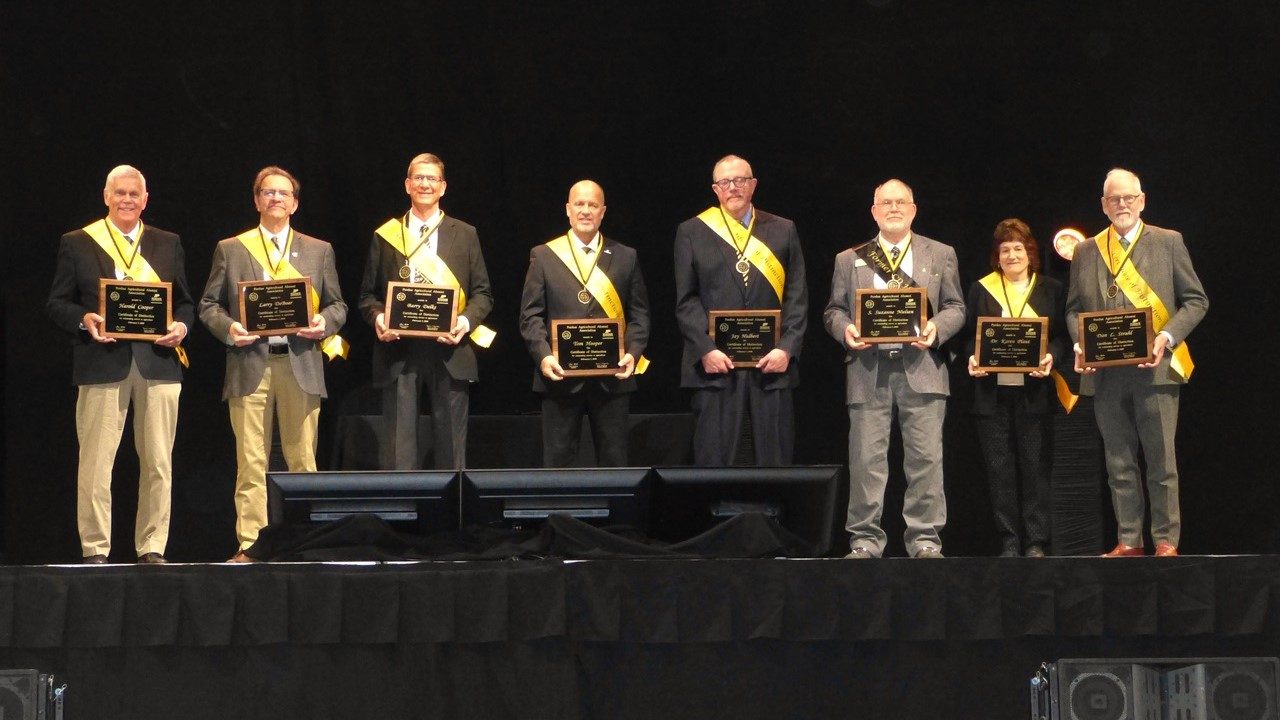
Eight extraordinary leaders from across the fields of agriculture were recognized with the Purdue Agricultural Alumni Association’s highest honor—the Certificate of Distinction—during the Purdue Ag Alumni Fish Fry on Saturday, Feb. 7 at the Tippecanoe County Fairgrounds in Lafayette, Indiana.
The Certificate of Distinction is presented each year to those who have contributed to agriculture, forestry or natural resources through career accomplishments, organizational involvement, community service and other activities.
The following individuals were honored this year:
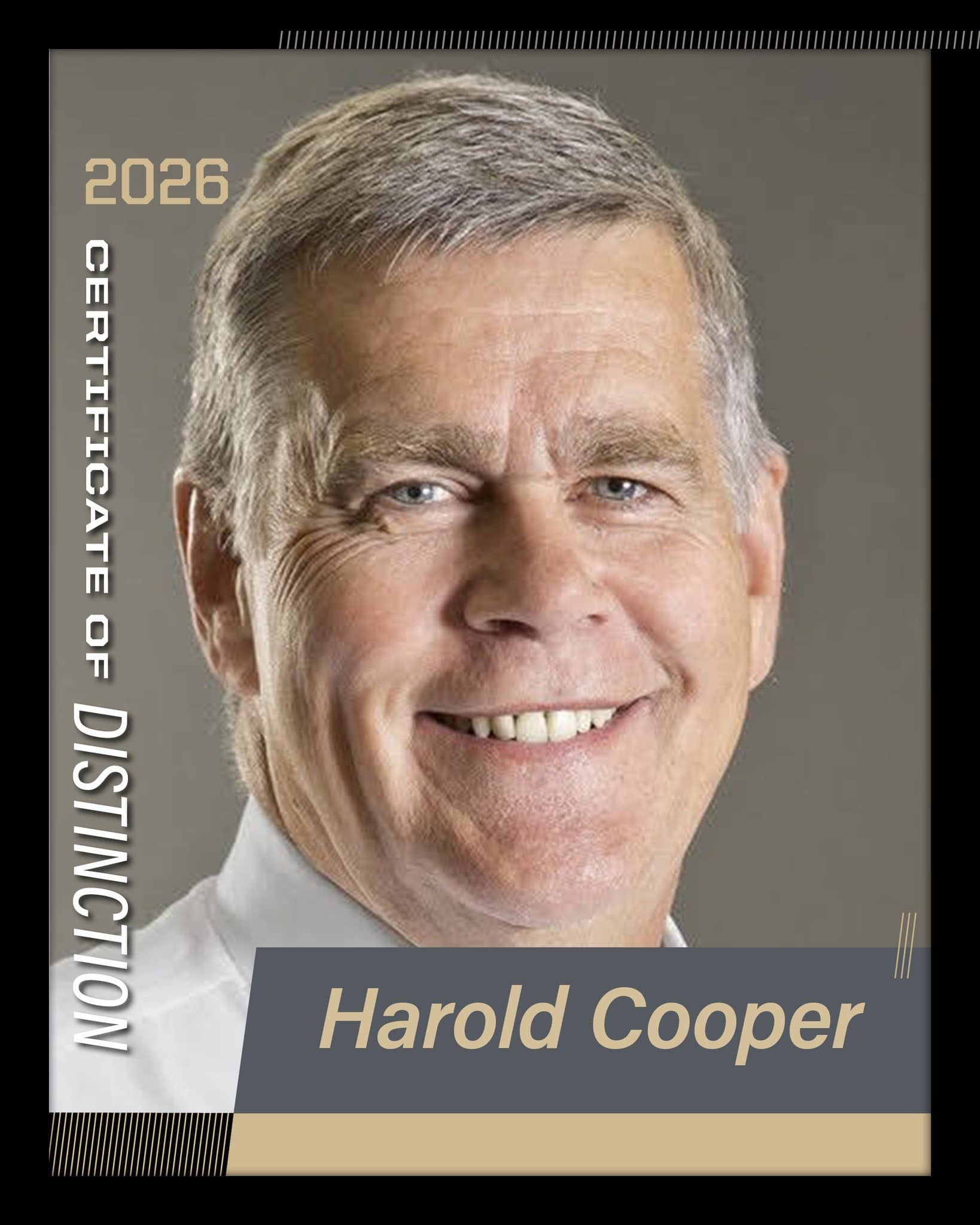
HAROLD COOPER – Seymour, Indiana
As a front wheel of the truck steered by a distracted Harold Cooper climbed a smaller vehicle’s windshield, the folks running Jackson-Jennings Co-op in Seymour in 1978 might’ve questioned their decision to offer the college freshman an internship.
“I think that day they said, ‘We like this kid but we don’t think he’s going to be anything but management. We’ve got to get him someplace where he’s not putting us at risk,’” Cooper says.
That’s how it played out, more or less. One summer internship turned into five, paying for the Tri High School (Henry County) graduate’s Purdue University bills and providing a graduate-level education on why co-ops exist and how they can prosper. His College of Agriculture counselor, Dave Downey, had advised a briefer co-op experience, saying greater challenges lay elsewhere.
Years later, Downey, a 2007 Certificate of Distinction recipient, retracted that advice, because Cooper obviously had seen the light. Leading with humility, vision and a deep sense of purpose, he’s spent nearly 50 years in the Indiana farm cooperative system, advancing from branch manager at Jackson-Jennings Co-op to executive positions at Growmark and CountryMark and, since December 1999, chief executive officer of Premier Companies, a Seymour-based farmer-owned cooperative of predominantly family-owned businesses.
“Harold’s eye has always been on the horizon,” a peer wrote in support of Cooper’s nomination. “What will American farmers need in 10, 20 or 30 years?” An early and strong supporter of the biodiesel industry and a former board chairman of the Agricultural Retailers Association, Cooper has been “innovative in moving initiatives forward where others hesitate, giving the organizations he is part of a competitive edge,” another nominator says.
Self-help books leave him cold, but military history is instructive. “Conflict brings out the best and the worst. At one moment, whatever you are, you’re forced to express that. Innovations, technologies and competition change. Human nature is more predictable.” Board members and employees know he likes “to be part of the discussion. With shared interests and respect for one another, we argue it out. Argument is the purest form of debate.”
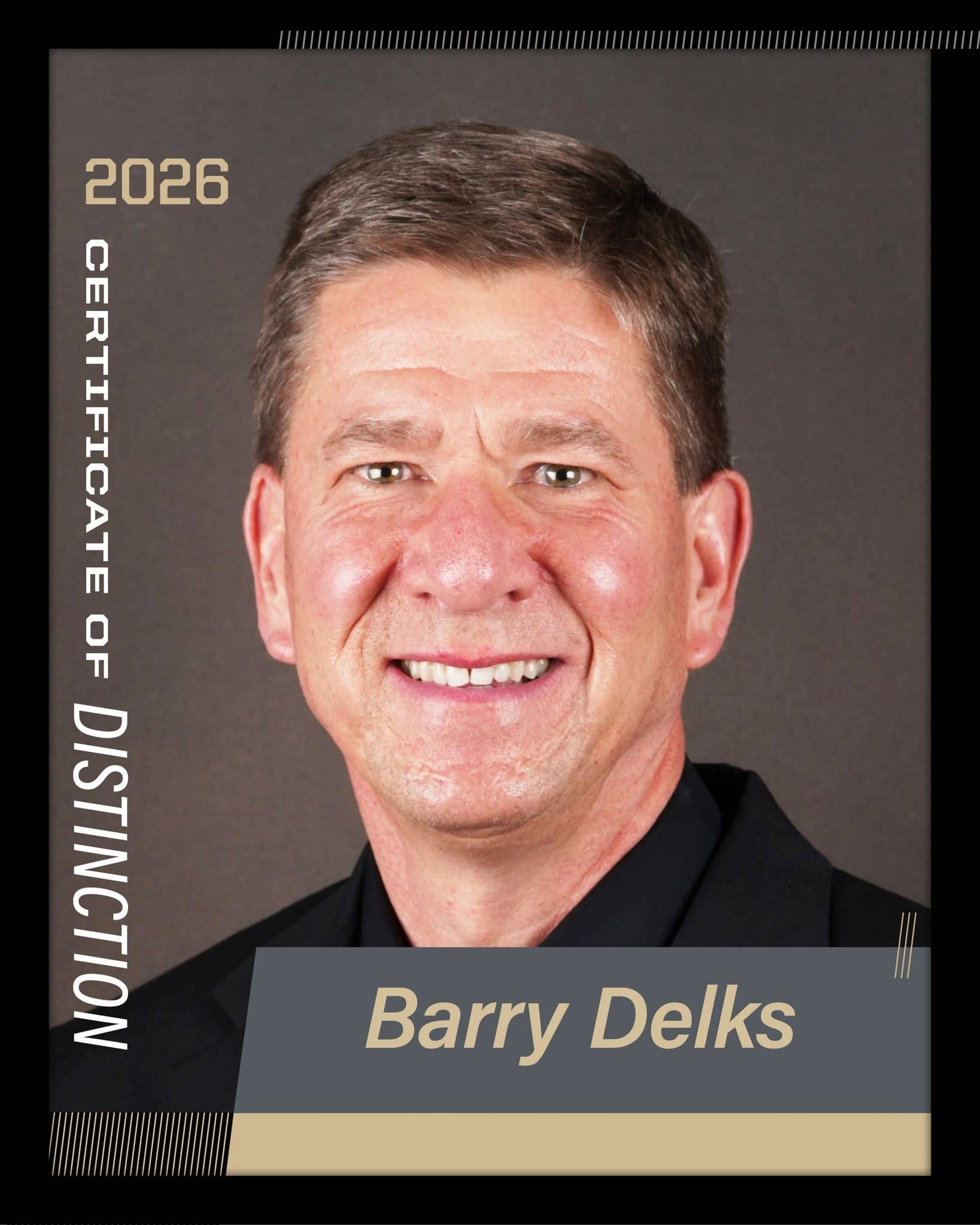
BARRY DELKS – West Lafayette, Indiana
After five minutes — OK, three — in his orbit you understand why it seems like everyone has a Barry Delks story. These stories have much in common, as do the letters of support for his Certificate of Distinction nomination:
- “A servant’s heart and a tireless dedication to student success.”
- “Barry saw potential in every student and knew how to help them flourish.”
- “His impact is felt not only at Purdue but across the state and nation.”
The Purdue graduate returned in 1990 and was an Extension educator, then director of Breaking New Ground Resource Center. In 2000, he became the coordinator of career services for the Department of Animal Sciences until January 2025. His retirement party filled the Creighton Hall bleachers.
- “Barry connected current students with alumni and kept alumni like me connected to the university.”
- “He combines intellect, integrity and industriousness with humility and an unwavering drive to serve and innovate.”
In 2023, Delks received the Special Boilermaker Award from the Purdue for Life Foundation. It honors faculty or staff whose contributions improved the quality of life for a substantial number of Purdue students.
A 2007 graduate who then earned a veterinary medicine degree said Delks “served as a bridge — connecting the classroom to its real-world application, and connecting Purdue to home, wherever home may have been for each student.”
Courses that Delks taught — freshmen orientation, sophomore career planning, senior seminar — “are cornerstones of the Animal Sciences curriculum, known for their high impact and deep relevance,” his award nominator wrote. “I do not believe there is another person who has been more integral in creating the workforce that drives Indiana animal agriculture. He has directly facilitated and shaped the incredibly successful careers of thousands of Purdue graduates.”
A former teaching assistant came to realize that Delks was steering students “not just toward a career but toward a purpose — helping us discover where our strengths and passions intersected. He celebrates achievements, offers guidance and maintains relationships long after students leave Purdue. Simply put, Barry makes people feel seen, supported and capable of more than they ever imagined.”
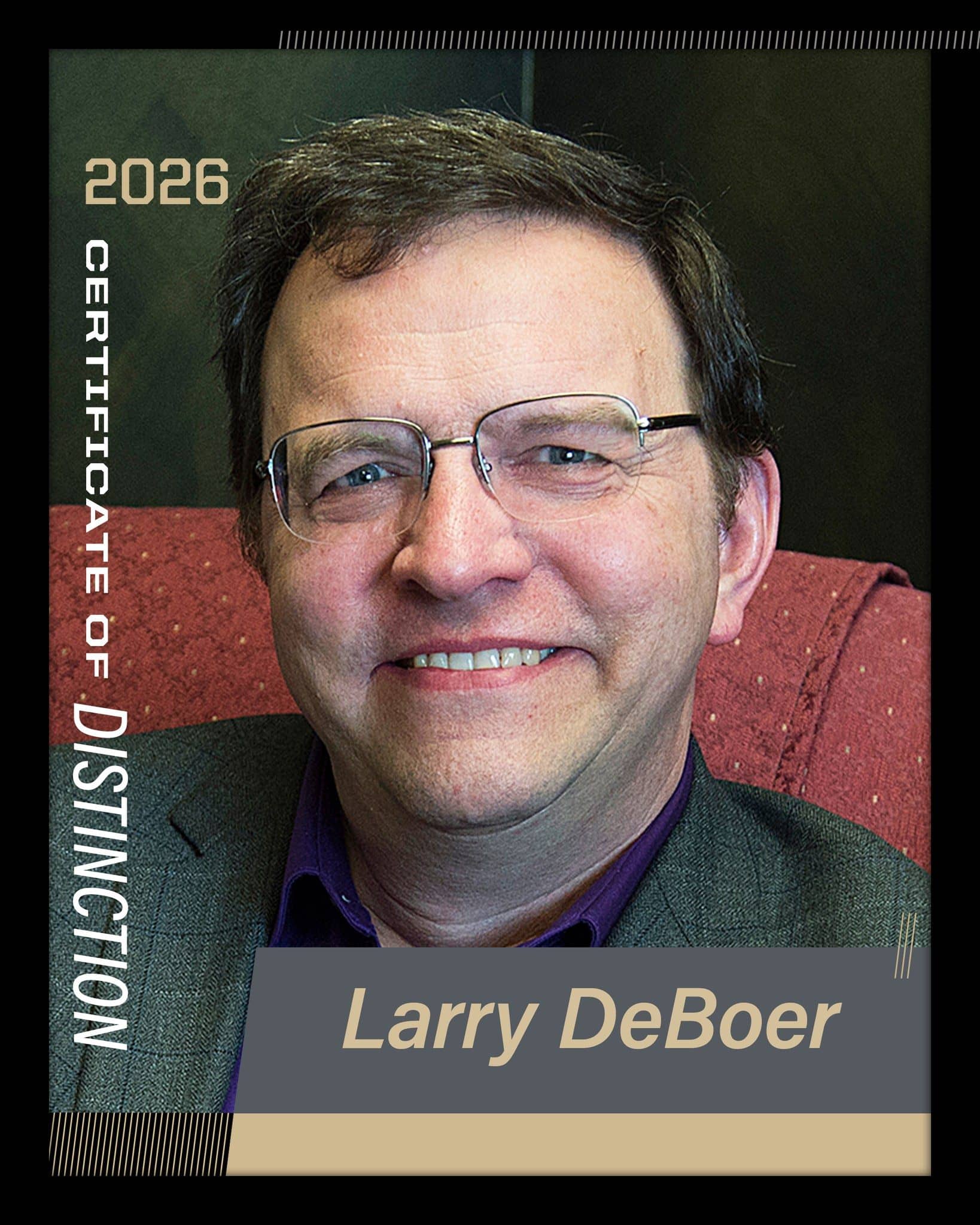
LARRY DEBOER – West Lafayette, Indiana
He taught AGEC 217, macroeconomics, for 35 years, sometimes at 7:30 a.m. Not even 20 sleepy Boilermakers were in his first class in 1986; word got out, and more than 400 were in his last. Scores of workshops seek his input: “I always look forward to sitting in the front row,” a local school official says. The president of an Indianapolis company that relies on Larry DeBoer to analyze public finance issues says, “If he were not such a great friend, I would be jealous of his complete mastery of the art of making what are essentially ugly economic and tax numbers engrossing to farmers, county officials and legislators.”
“The breadth of his impact is striking,” a peer says of a man who for decades was both behind the scenes yet front and center. Long considered Indiana’s preeminent expert on property taxation, DeBoer’s mid-1990s work for a state board became the technical foundation for reconstructing Indiana’s entire property tax system. (An Indiana Supreme Court ruling made that a requirement, not an option.) Every farmland assessment in Indiana reflects methodologies he helped develop and validate.
“Exceptional effectiveness” is a result of “seamlessly integrating research, teaching, Extension and service into a coherent whole,” the peer wrote in support of DeBoer’s Certificate of Distinction nomination. “Few agricultural economists have achieved impact across so many dimensions simultaneously. His career represents the land-grant idea fully realized: Rigorous research addressing real problems, teaching that prepares leaders, Extension that serves communities and service that improves governance.”
The Charles B. Murphy Award — Purdue’s highest teaching honor — was bestowed in 2015, two years after induction into Purdue’s Book of Great Teachers. One student review said the professor’s “enthusiasm for the material was infectious.”
DeBoer wrote 301 monthly “Capital Comments” columns that ran in newspapers and online. They were conversational in tone. More than a third were about property taxes.
“What made his Extension work particularly effective was his genuine respect for his audiences,” a Purdue Extension educator wrote. “He often told me, ‘I may know a lot about local government or the state revenue system, but the people in the room — they are the experts on their community.’ This humility and respect made his educational programming collaborative rather than condescending.”
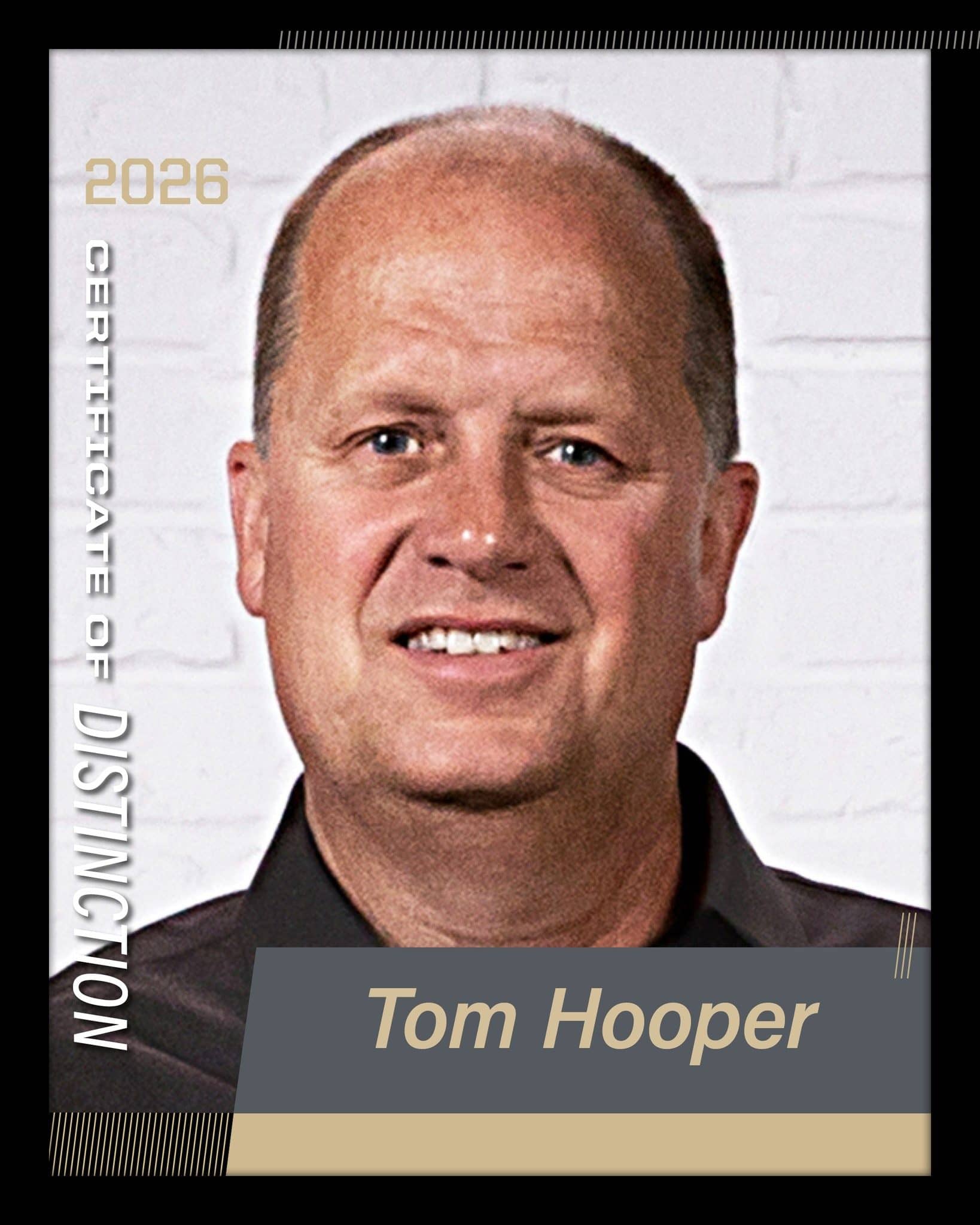
TOM HOOPER – Atlanta, Indiana
Beck’s Hybrids dates to 1937. When it hired its 17th full-time employee in 1990, envisioning the firm becoming the nation’s largest family-owned seed company, with 1,100 full-time employees in 20 states, might have seemed as unlikely as No. 17 being on the payroll for 35 years.
Tom Hooper’s first assignment was front counter sales and service support. But he’s been on Beck’s leadership team for most of his tenure, and he had plenty to do with that corporate surge. “If you look closely,” a coworker insists, “you will find his blood, sweat and tears embedded in the walls.” Hooper has been director of business for nearly a decade, overseeing sales, finance and information systems for the nation’s third-largest seed brand.
Hooper holds both a bachelor’s and master’s degree in agricultural economics from Purdue along with an MBA from Indiana University’s Kelley School of Business. “Tom’s understanding of the drivers behind human nature and agricultural economics has been demonstrated through initiatives he led,” a Beck’s executive says.
A managing director of a financial services cooperative credits Hooper with “a rare balance of intellect, creativity and pragmatism that has been fundamental in guiding the strategy, market positioning, operational excellence and leadership of this exceptionally successful business.
“It is common to find these attributes in the C-level executive teams of leading food and agricultural businesses that enjoy the benefits of large teams of professional talent. It is not common to find such talent in an individual who has invested his career with one company.”
A recent acquaintance quickly noticed Hooper’s “natural ability to see what others often don’t — with the capacity to anticipate obstacles and roadblocks and help others navigate some of their most difficult decisions.”
Hands-on compassion blooms every other Thursday night in Hooper’s garage. Those who speak “the common language of wrenches, oil and engines” help those without the means to pay. “We have fixed cars that will not start, performed countless brake jobs and even rebuilt engines in his shop,” a friend and coworker says. Tools that Hooper may never personally need keep appearing.
“Tom’s goal is clear: Keep the momentum rolling on opportunities to help others succeed.”
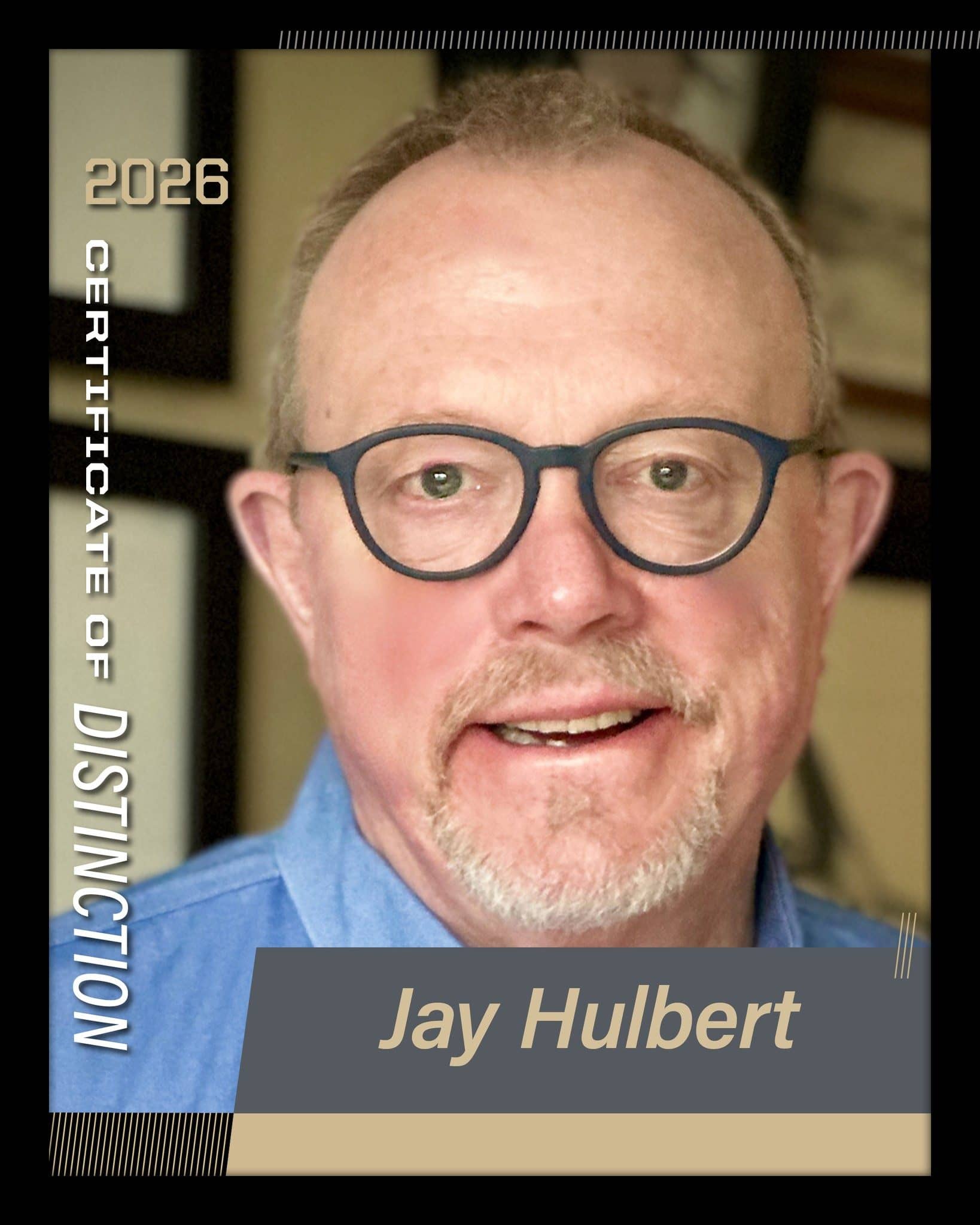
JAY HULBERT – Romney, Indiana
A former Agricultural Alumni Seed Association board member recalls Jay Hulbert’s 2012 arrival as a “very welcome breath of fresh air.” The nation’s premier supplier of popcorn seed modernized during Hulbert’s 13 years as president and chief executive officer. Sales doubled; profits rose.
Ag Alumni Seed, a nonprofit, invested more than $8 million in Purdue’s College of Agriculture. And, because that’s what he does, Hulbert also invested himself.
“Jay knew that standing still was a recipe for getting left behind. He kept Ag Alumni Seed, his friends at Purdue and the industry looking in one direction — ahead,” a former chief financial officer says.
A professor and soybean expert calls Hulbert “an exceptional advocate for university-industry partnerships, fostering initiatives that strengthened the research pipeline from discovery to commercial application.”
“Popcorn seed is the main driver of Ag Alumni Seed,” a former dean says, “but Jay supported commercialization of grains such as dhurrin-free sorghum, orange corn and wheat varieties. His contribution was much more than just taking the products that Purdue scientists developed. It included helping them design the critical experiments needed for commercialization, growing varieties for them for testing, finding markets for products and investing in commercialization.”
Dhurrin-free sorghum lowers the risk of prussic acid poisoning in forage sorghum. “Today that technology is in the hands of farmers,” says a plant sciences professor who led a team of researchers encouraged by Hulbert. “That achievement would not have been possible without Jay’s vision, leadership and unwavering support.”
Jianxin Ma is a professor and Indiana Soybean Alliance Chair in Soybean Improvement. “I expected that a company focusing on popcorn research, production and sales might have limited interest in supporting work in soybean genetics,” he wrote in support of Hulbert’s Certificate of Distinction nomination.
“I vividly recall approaching our first meeting with hesitation, uncertain whether my vision for soybean research would align with his priorities. To my surprise, Jay devoted his time generously, toured our soybean field plots at ACRE and demonstrated immediate and enthusiastic support. He provided vital gift funding that proved transformative, allowing my team to pursue innovative research directions and offering undergraduate students, in particular, opportunities to participate in cutting-edge research they otherwise might not have experienced.”
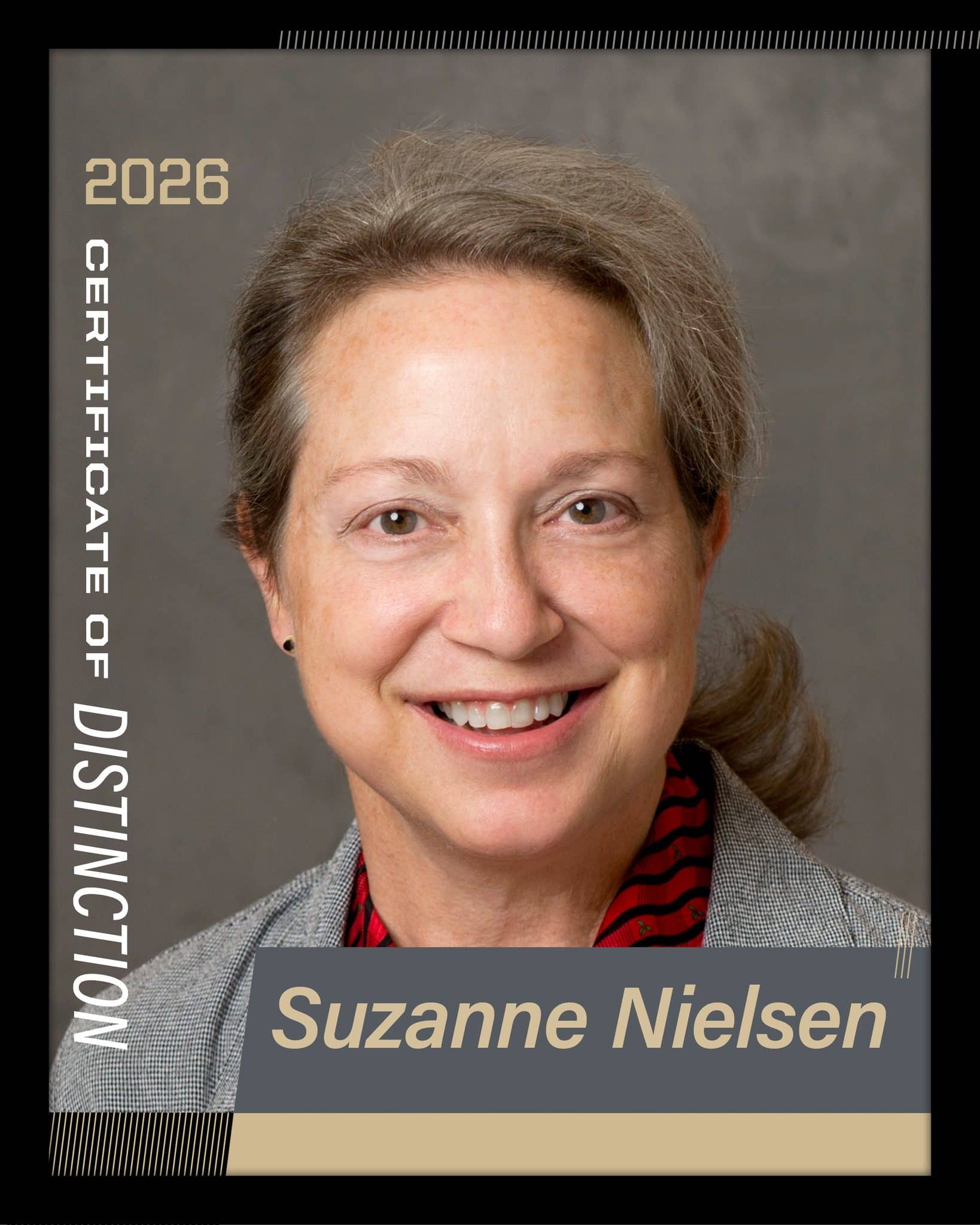
SUZANNE NIELSEN – West Lafayette, Indiana
(1953 – 2025)
Her disarming smile, prodigious talent and dignified presence graced Purdue University for 39 years. It wasn’t long enough, was it?
Suzanne Nielsen, whose academic journey began in a one-room Nebraska schoolhouse, led the Department of Food Science for 10 years. In 1990, she helped create “Food Analysis,” a textbook/lab manual, now in its sixth edition, translated into several languages and adopted by universities worldwide. In 1997, she became the first woman in the College of Agriculture to receive the annual Agricultural Research Award.
In 2018, Purdue’s Book of Great Teachers welcomed her, and she was named a 150th Anniversary Professor, capping a lengthy list of recognition from the university, college, U.S. Department of Agriculture and professional societies.
Nielsen was deputy director for USAID’s Feed the Future Food Processing Innovation Laboratory. After helping Zamorano Pan-American Agricultural School build a food science program in the late 1990s, Nielsen brought students from the Honduran university to her lab. More than 100 Zamorano students have come to Purdue, and many earned graduate degrees. Nielsen’s husband, agronomy professor Bob Nielsen, helped create a similar program that now brings five interns every year to other departments in the college.
Kindness is the most common thread in the tributes that followed her October passing: “I will never forget your encouraging words, especially when I came back from a terrible job interview. You said, ’If you didn’t feel welcomed, they don’t deserve you.’” And, “A person felt special being in her presence.”
“Dr. Nielsen exuded kindness,” a former graduate student wrote, “while simultaneously demanding the best from her students.” Another noted that the food analysis course “was HARD, but her dedication to helping each student succeed made you want to work hard to gain just a bit of her knowledge.”
As a University of Florida professor, a Zamorano graduate, put it, “Some mentors change your career. A few change your life.
“Last December, I had the joy of catching up with Suzanne in person. True to form, the conversation was not centered on her but on me. She listened deeply, offered thoughtful counsel and then gave me the hug I didn’t know I needed. That was Suzanne: Always turning the spotlight away from herself and toward the growth and well-being of those around her.”
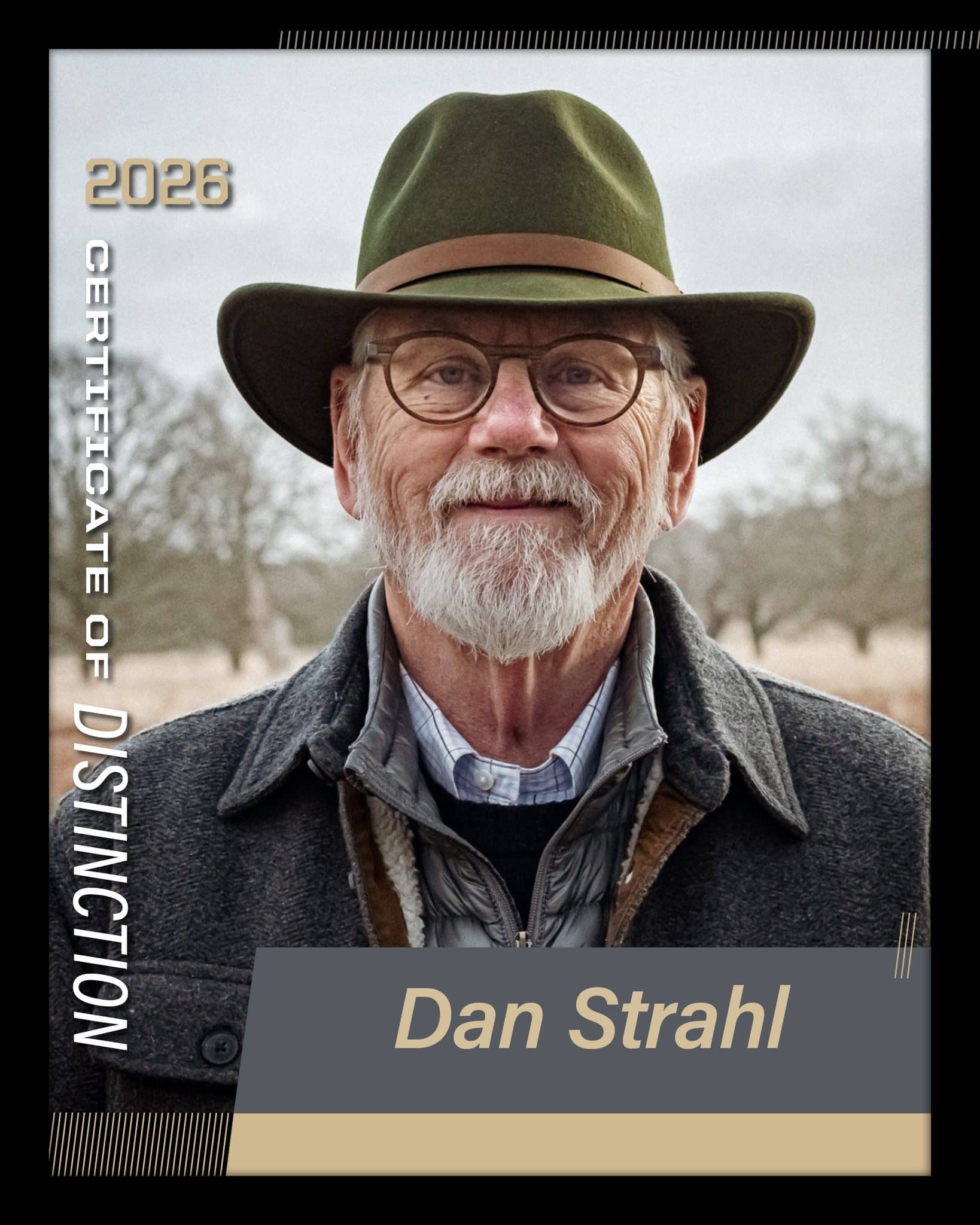
DAN STRAHL – Greenfield, Indiana
The law firm he established more than 35 years ago thrives in Hancock County. So does Black Acre Farm, where multiple flocks of nationally recognized purebred sheep have flourished under the direction of Dan Strahl, the 2024 recipient of the Indiana Livestock Breeders Hall of Fame Award.
“We often see our work as a matter of life or death,” he told a friend who asked why he prefers living on a working farm, “but unless you come home at night and get some dirt on your boots, you lose perspective.”
He’s raised sheep since childhood in Gem, generously a dot on an Indiana map. The New Palestine High School graduate majored in animal sciences at Purdue, then earned a master’s degree in ruminant nutrition from the University of Missouri. A career with the Indiana State Board of Health and the Department of Environmental Management preceded a 1987 law degree from Indiana University. Agriculture-oriented landowners and agribusiness professionals seek his strategic advice.
The scholarship fund in the name of Roger Hunsley was a Strahl creation, a tribute to the revered longtime coach of the Purdue livestock judging team. For decades Strahl’s sheep judging skills were sought for multiple major national competitions. And his sheep — Suffolk, Hampshire and, more recently, Cheviot — earned championships too.
“My father had a flock of typical Cheviots some 60 years ago,” says a former fraternity brother and now fellow Certificate of Distinction honoree. “They were of smaller body structure and less muscling. Dan’s Cheviots are truly advanced genetics. An example of the scientific reproductive techniques that he utilizes: Superovulation physiological applications to be able to harvest up to six to eight embryos in a breeding cycle from his champion Cheviot ewes.”
Nowadays about 100 Cheviots are the stars of Black Acre Farm educational tours for school groups. Strahl has visited and established personal connections with Cheviot breeders and farmers in Scotland, the breed’s country of origin, to exchange best practices. An American Cheviot Sheep Society board member since 2021, he’s a former president of state Hampshire and Suffolk associations.
Source: Purdue Agricultural Alumni Association