Across Indiana, young people in 4-H are getting a head start on the future of work…one robot at a time.
From coding and robotics to collaborative robots, or “cobots,” students are gaining hands-on experience with the same technologies transforming today’s industries. These aren’t just classroom lessons, 4-H members are building machines, writing code, and learning how to apply those skills to real-world challenges.
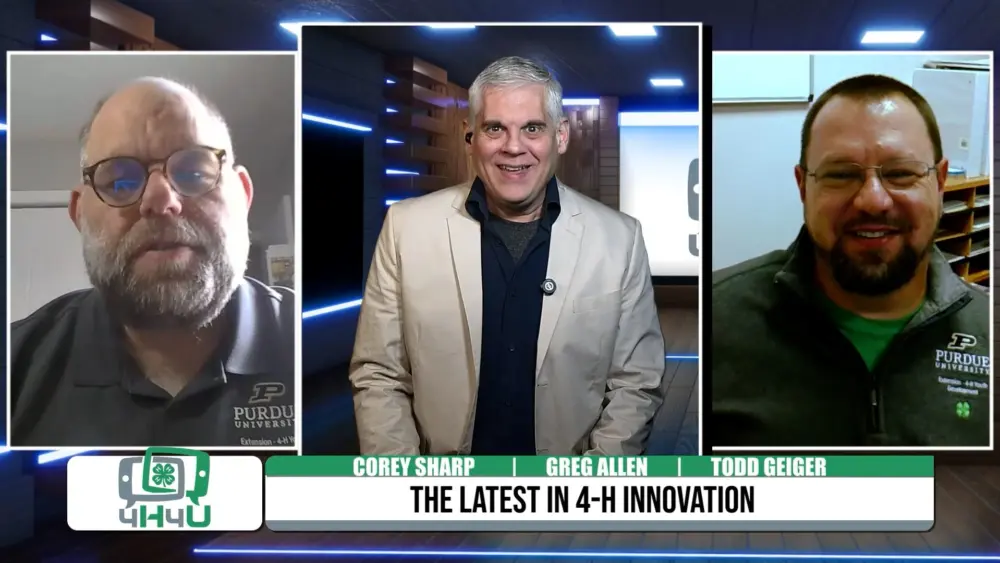
According to Corey Sharp 4-H Youth Development Director, “We take the kids into a local manufacturer, they give us a manufacturing challenge that they legitimately have in their facility, and they have to solve problems and oftentimes the kids are starting to use the cobot as a solution to whatever that manufacturing challenge is.”
Educators say the focus on STEM: science, technology, engineering, and math, is helping students develop critical thinking, problem-solving, and teamwork skills that are in high demand across the workforce.
4-H Youth Development Director Todd Geiger says, “There are people in the room that own businesses that are like, oh my gosh, if you guys were able to assemble this, how can I get you on my team for when you graduate? Because this is the new technology that’s out there that is totally impactful to what we do and brings a value to what we’re doing.”
Through workshops, competitions, and local club projects, participants are exploring everything from automation to artificial intelligence, often working side-by-side with mentors and industry partners.
Geiger adds, “They’re like man, this was awesome. If I got to do this for a job and got paid, like, it really feel like I’d never actually went to work at all. I just get paid to do what I love doing, and that’s really my whole focus behind it. So, making those connections and showing those kids how it does have those real world connections by bringing in folks that we partner with, I think to me is critical.”
As technology continues to evolve, Indiana’s 4-H students are proving they’re ready to meet the moment…and build what comes next.
Watch the 4H4U podcast that covers all of this and more: